Fun Pens Kids Actually Write With: Fuzzy, Funny, Fluffy & Silly
What do people call these pens, anyway?
Search data says shoppers can't agree on a name, and that's fine; they're describing the same pen. Someone typing fuzzy pens or fluffy pens is picturing the soft topper; someone typing pom pom pens is naming the topper precisely; silly pens and funny pens describe the personality; cute pens for kids describes the shopper's kid; and fun pens is the catch-all for the whole shelf. One pen, half a dozen names. Listings tend to standardize on “pom pom pens,” so if you're comparing options, that's the phrase that surfaces the most direct matches. Whichever word got you here, the buying logic below is the same.
One useful distinction hiding in the naming: fun pens as a category is wider than the fuzzy kind. It also covers multicolor gel packs, shaker pens, and light-up pens, and those are genuinely different products with different trade-offs, which we'll get to near the end. This guide's home turf is the fuzzy/fluffy/pom-pom kind, because that's the one we make.
The one rule: it has to be a pen first
Everything else in this guide hangs off this. A fun pen is a functional item wearing a costume, and the purchase only works if the functional part holds up. A pen with a face that writes smoothly becomes that kid's pen: they picked it, they recognize it, they keep track of it, and it rides in the backpack to school and back every day. A pen with a face that skips and dies becomes a lesson that the fun thing was disposable. We've made this argument before about cute supplies generally in our cute school supplies in bulk guide, and it goes double for pens, because a pen has a mechanism that can fail in a way a keychain can't.
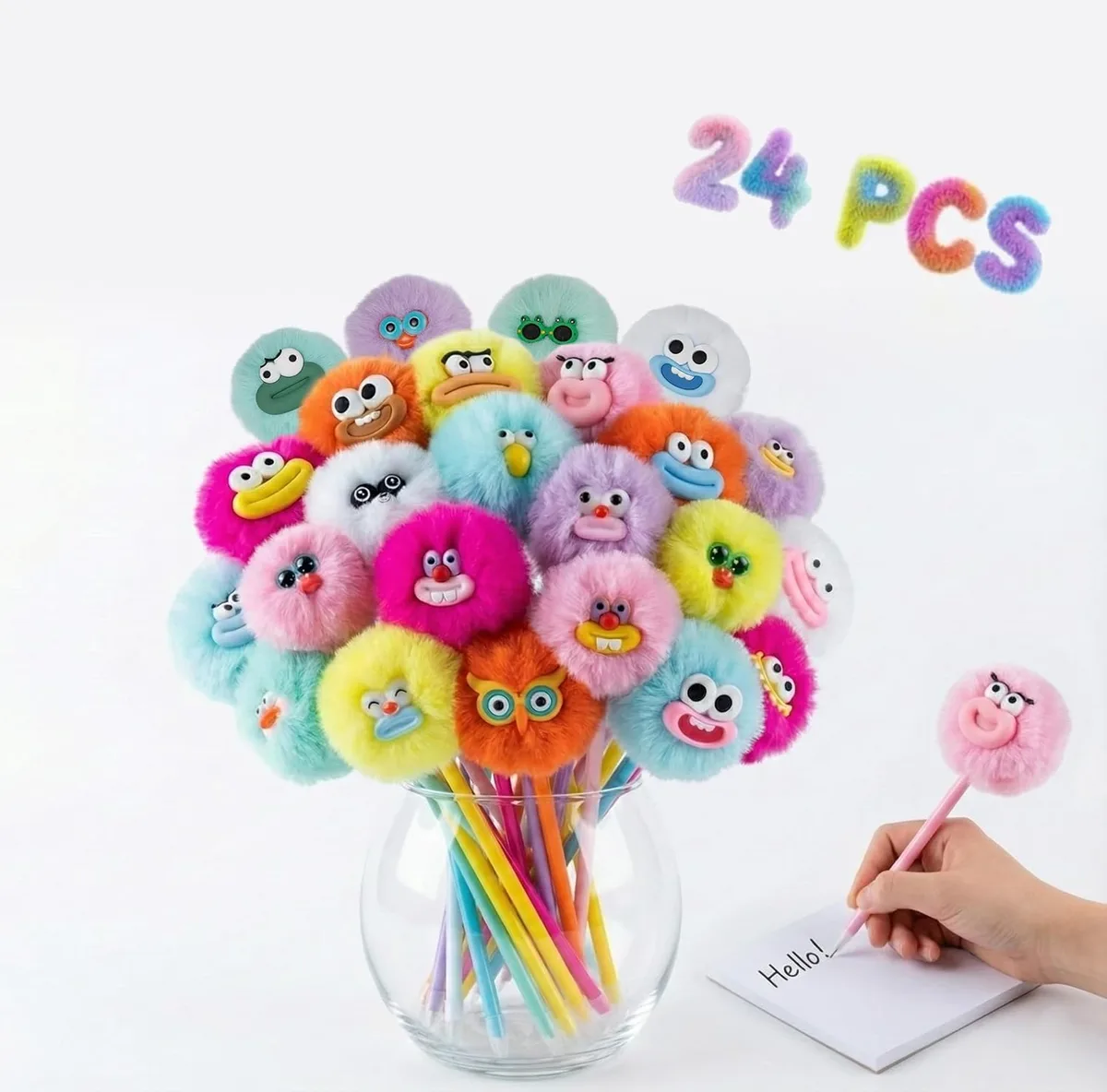
So when you're evaluating any fuzzy pen listing, ours included, judge it the way you'd judge a plain pen: does it write and keep writing per the reviews, and is the topper attached well enough to survive a backpack. Only after those pass should the cuteness get a vote. That's the standard we built our own pack against:

Where fun pens earn their keep
A pen does a different job than a trinket, and it shines in the settings where “still useful next week” matters:
- Class store anchor. A classroom economy needs a prize worth saving up for, and a fuzzy pen is a natural anchor: it's desirable enough to hold a week-plus price in class currency, and it keeps advertising the store from the pencil case every day after it's won. Our class store prize ideas guide covers the full three-tier shelf and where the pens slot in.
- Student gifts. End of year, back to school, milestone rewards: a pen reads as a real gift rather than a handout, because it's a thing the student will use. One assorted 24-pack covers a class with spares, and the assortment means each kid picks a face instead of receiving a clone.
- Party favors and goodie bags. A fun pen is a non-candy favor that still works on Monday. It skews school-age (a favor that writes is wasted on a three-year-old), but for an elementary birthday list it's one of the safer picks going.
- The teacher desk jar. Plenty of teachers keep a jar of loaner pens, and making it a jar of silly pens does two jobs at once: borrowed pens come back (nobody quietly pockets a pen with a fluffy face on it), and the jar itself becomes a tiny bit of classroom personality.
The trap: the novelty pen that stops writing
The fun-pen shelf is full of products designed backwards, topper first and pen as an afterthought. They photograph beautifully, they cost pennies less per piece, and then the ink skips within days, the refill turns out to be a stub, or the topper sheds and pops off the barrel. We're not naming names; the pattern matters more than any brand. The tell is a listing that spends every photo on the fluff and none on the pen: no tip, no ink color, no shot of a written line.
The cost of that failure isn't just the dollar. When a prize pen dies in a week, the kid stops trusting the prize shelf, and the teacher goes back to stickers. A fun pen that stops writing is landfill with a face. So screen for the pen part deliberately: check the listing for writing details and the recent reviews for “stopped writing” complaints, and treat a suspiciously low per-piece price as a signal that the budget went into the topper.
The bulk math
Our pom pom pens currently run $22.99 for 24 pens, or about $0.96 each each. That's the top of the per-piece range in our own lineup, and we've said so plainly on the product page: the premium pays for the working writing mechanism. Here's how the pens sit next to the pack they pair with most often:
| Pack | Pieces | Price | Per piece | Job |
|---|---|---|---|---|
| Pom Pom Pens – 24 PCS (this guide's pen) | 24 | $22.99 | $0.96 each | The useful prize; lives in the pencil case |
| Kids Keychains – 24 PCS | 24 | $15.99 | $0.67 each | The keepsake prize; rides the backpack zipper |
The two make a natural desk-jar-and-prize-shelf combo: keychains are the cheapest pack we make, so they stock the approachable shelf, while the pens hold the “worth saving for” slot because they're the prize that's also a tool. If you're stocking a whole prize table rather than one shelf, count the group, add spares, and buy the pack once. Loose fun pens from a checkout rack are the most expensive way to get them.
What age are fun pens for?
School-age writers; the answer is baked into what the product is. A pen's whole advantage over a trinket is daily use, and daily use starts when a kid writes regularly, roughly grade school and up. Below that age the pen part is wasted, and the pom pom is a small part on a writing instrument, so fuzzy pens aren't a toddler item. The small-parts line is age three, and we didn't set it; the age grading on each listing is the rule, not a suggestion. For a younger crowd, a soft favor with no small clip or tip (a squishy, say) is the better-fitting pick from our lineup.
Fun pen types we don't make
The fuzzy kind isn't the whole category, and depending on the kid, one of these might genuinely fit better. We don't make any of them, so consider this a neutral read of the trade-offs:
- Multicolor gel pen packs. A rainbow of ink colors in one box turns note-taking and doodling into the fun part, and for a kid who loves to color-code, nothing else scratches that itch. Quality varies enormously pack to pack, though: skipping, blobbing, and colors that dry out early are the category's chronic complaints, so recent reviews matter even more here than usual.
- Shaker pens. A charm rattles or slides inside the topper, so the pen doubles as a fidget between sentences. They tend to be top-heavy to write with, and the rattle that's fun at home is noise in a quiet classroom.
- Light-up pens. At a sleepover or a party table, the pen that lights up wins the first five minutes. But the battery is a countdown, usually a non-replaceable one, and when the light dies you're left holding whatever pen was underneath.
The pattern across all three is the same risk: the pen underneath. Whichever kind of fun pen you land on, check the writing part first.
Frequently asked questions
What are the fluffy pens called?
Most listings call them pom pom pens, but shoppers call the exact same pen fuzzy pens, fluffy pens, silly pens, or just fun pens: different names for a real pen with a soft fuzzy topper. If you're searching, pom pom pen is the most common name and the others land you in the same place. The name matters less than whether there's a pen that writes underneath the fluff.
Do pom pom pens write well?
Ours are real pens with a fluffy pom pom on top, so they write like a normal pen. For tip and ink specifics, check the Amazon listing, where those details are shown rather than promised here. And for any fun pen, ours included, the recent reviews are the best read on how it keeps writing over time.
Are fuzzy pens good classroom prizes?
Yes. A fuzzy pen is one of the better anchor prizes a class store or treasure box can stock, because it keeps working after it's won. It shows up in the pencil case every day and reminds the whole room the prize shelf is worth saving for. Ours are positioned as classroom rewards for exactly that reason.
What age are fun pens best for?
School-age kids who write regularly, roughly grade school and up. A fun pen is still a writing instrument, and a pom pom pen has a small pom pom part, so it isn't meant for toddlers. The small-parts line is age three, and we didn't set it; the age grading on each listing is the rule, not a suggestion.
Are fun pens too distracting for school?
Usually not. A working pen is a functional supply, and most classrooms are fine with a fun version of a thing the kid needs anyway. Rules vary by teacher, so glance at the classroom policy if you're unsure. Functional fun items raise the fewest questions, which is one more reason to pick a pen that writes over a pure novelty.
OMyFav makes the products featured on this page. All “shop” links go to our own Amazon storefront.