Piñata Stuffers Beyond Candy: What Actually Survives the Drop
Why fill a piñata with something other than candy?
Quick spelling note first: it's piñata with the tilde, but nobody types that into a search bar. Parents look for pinata stuffers or pinata fillers for kids, so we'll use both spellings and nobody needs to feel bad about it. So why change a candy tradition? Three reasons that have nothing to do with us selling toys. First, allergies: an edible favor is the one kind of favor a slice of your guest list may not be able to touch, and a piñata scramble is the worst possible moment to police who grabbed what. A non-candy fill means every kid keeps everything they catch, no label-reading at the pickup line. Second, heat: a piñata hangs outside, usually in the sun, usually for an hour before anyone swings at it. Chocolate doesn't survive that; it arrives as a bar and lands as a pouch of syrup. Third, candy is consumed and forgotten by bedtime, while a favor with a job, something that clips to a backpack or sits on a shelf, stays in use for months. That's the argument of our whole party favors guide, and the piñata version is simple: the fill is the favor, so fill it with something that lasts longer than the walk back to the car.
What actually survives the drop?
Think about what a piñata does to its contents, because the physics decides the shopping list. Everything inside gets shaken by every whack, then falls five or six feet onto grass, patio, or gym floor, then gets scrambled over by a herd of sneakers. Fill that fails does so in predictable ways: hard-shelled candy cracks, anything chocolate has already melted, and the cheap hard-plastic trinkets sold as pinata toys tend to snap at their thinnest point (the little hinge, the clip, the wheel) either on landing or under the first knee. We're not quoting a lab test here, just common sense plus years of making kids' favors: soft things don't shatter. A plush keychain lands like a plush keychain. A foam squishy is literally designed to be crushed and recover. Nothing about the drop, the floor, or the scramble can hurt them, and nothing about them can hurt the kid standing under the rain of fill, which is more than you can say for a fistful of hard candy from head height.
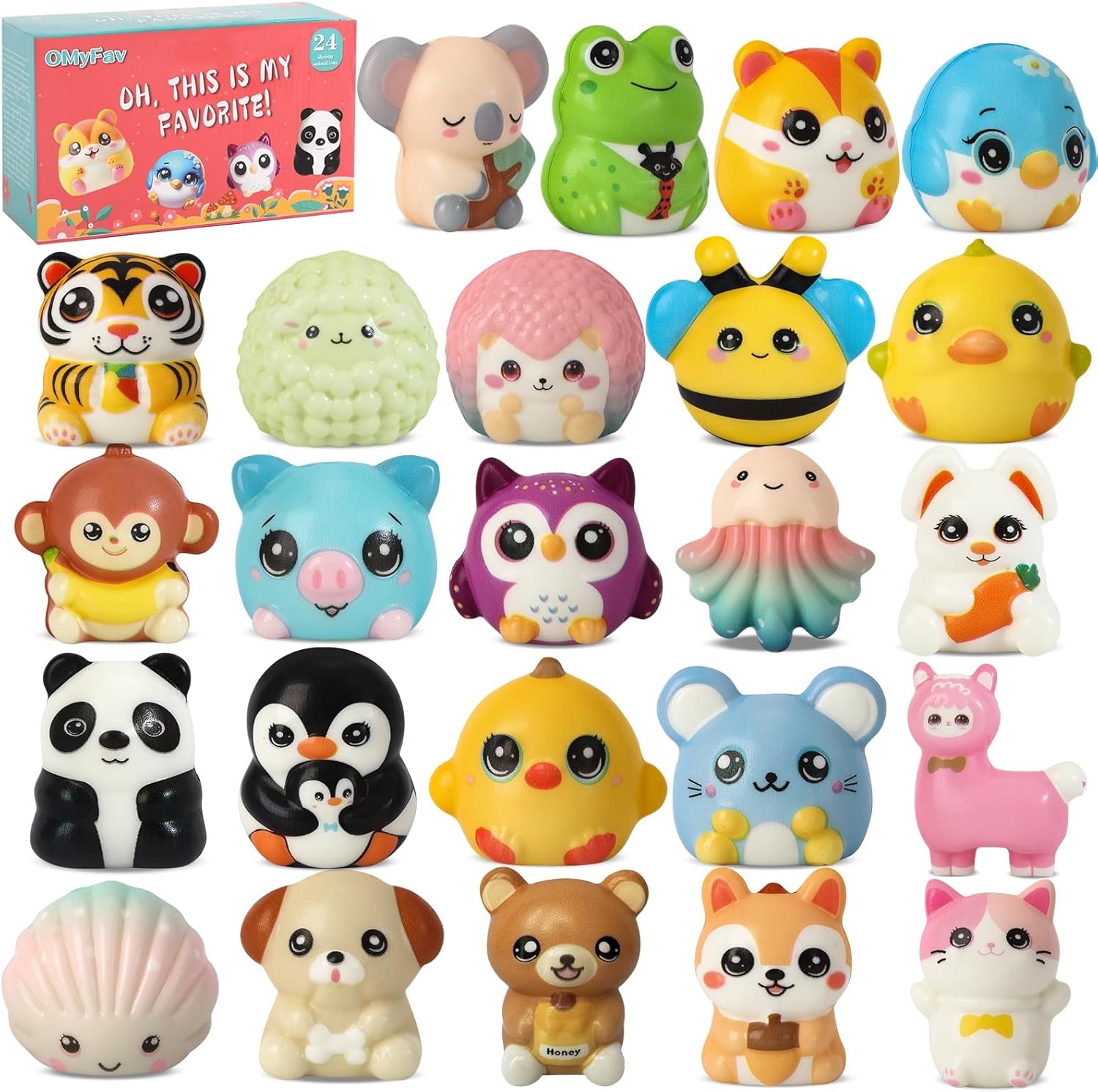
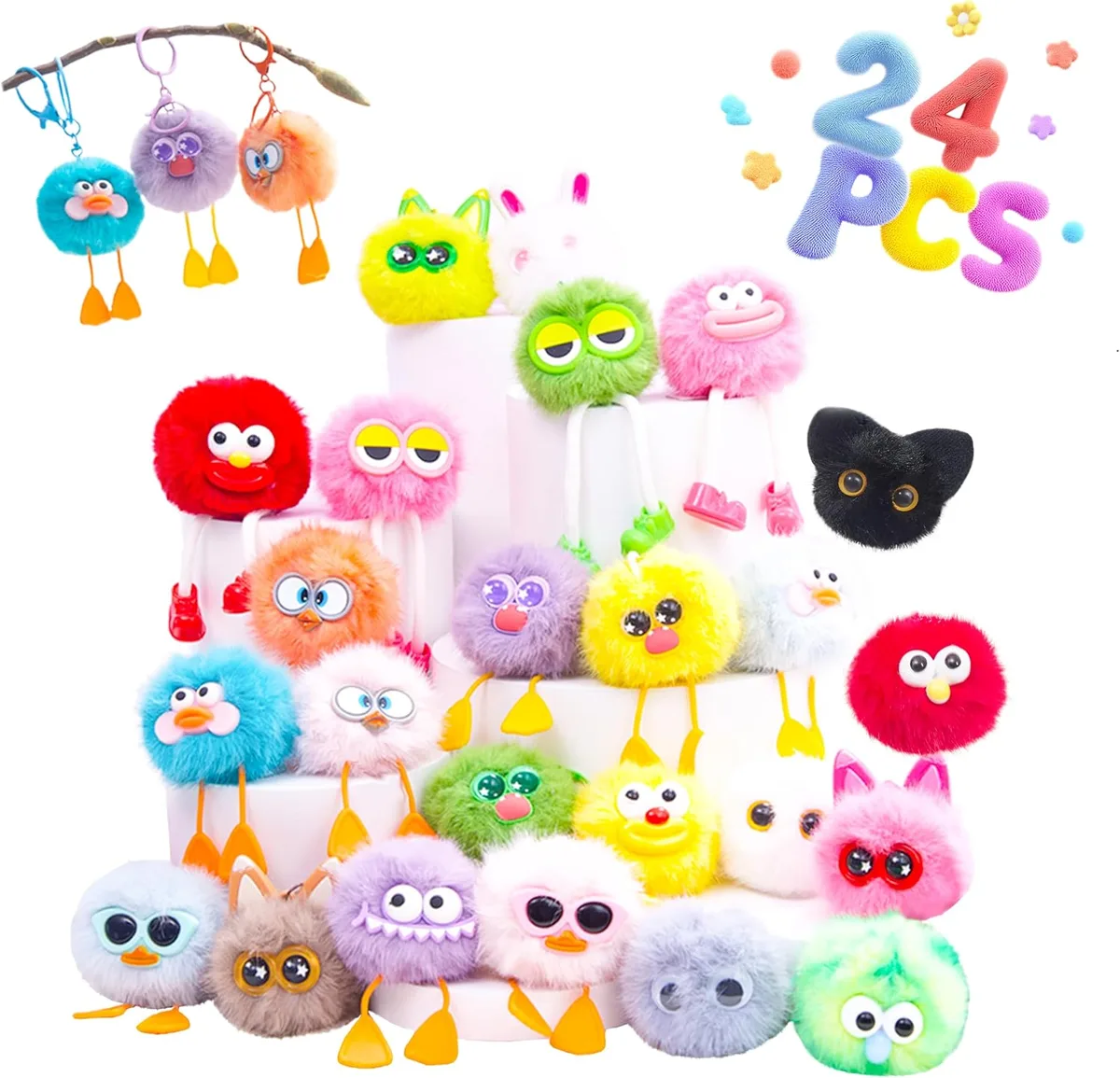
There's a second thing soft fill survives that nobody warns you about: the scramble itself. Wrapped candy that lands in the flowerbed is abandoned; a plush charm that lands in the flowerbed gets dug out. In our experience the plush pieces are the ones that disappear from the pile first. Kids spot them, grab them, and start comparing designs while the candy is still being stepped on. These are the two packs we'd pour into a piñata, both assorted designs, so the scramble doubles as a lucky draw:

How much should you put in a piñata?
The quantity question is really a fairness question. A piñata scramble never divides evenly; one kid comes up hugging seven things, another comes up with one and a wounded expression. The host's job is to fill generously enough that even the unlucky kid gets something. The math that works: two to three small pieces per guest. Twelve kids means roughly 24 to 36 pieces; a 24-count pack of pinata stuffers for kids covers that on its own or with a sheet of stickers torn into the mix. Twenty-plus kids means two packs, or one pack padded out with the cheap fillers in the next section. The budget is the usual one from our party favor cost guide, $1 to $2 per kid, and a piñata changes the delivery method rather than the arithmetic. Two practical caveats from the hosting side. Check the fill capacity printed on the piñata before you shop, because a standard one holds less than people remember, and plush fill is bulky for its weight: light enough that you'll run out of room before you run out of budget, which is the right way around. And hold back a handful of pieces instead of pouring in the whole pack; a small reserve is how you fix the crying-kid problem in ten seconds flat. Here's how our three 24-count packs price out per guest:
| Pack | Pieces | Price | Per kid (one each) |
|---|---|---|---|
| Kids' keychains (lowest price) | 24 | $15.99 | $0.67 each |
| Animal squishies | 24 | $18.99 | $0.79 each |
| Cute chickie keychains | 24 | $19.99 | $0.83 each |
If you're mixing piece values, a few anchor favors plus a lot of cheap filler, you're using the same tiering logic we lay out for prize booths in our carnival prize ideas guide: volume from the cheap tier and the memorable piece from the good tier.
Which piñata fillers work that we don't sell?
One disclosure, same as every roundup on this site: we make keychains and squishies, and none of the items below are ours. They're still legitimately good non-candy pinata fillers, and a mixed fill is usually better than a pure one, with more pieces per dollar and more variety in the pile:
- Temporary tattoos. Featherweight, so they pad the piece count for pennies and flutter down harmlessly. They're paper, though: on a damp lawn or near the punch table, the bottom layer of the scramble comes up soggy.
- Stickers. The cheapest legitimate filler there is, and every age accepts them; a full sheet lands flat and gets stepped on, so tear sheets into singles or fold them before they go in.
- Bouncy balls. Genuinely drop-proof, since bouncing is the product, and beloved by the 6–9 crowd. They bounce on release too, scattering twice as far as everything else, and they're a small-parts no for toddlers.
Any of these plus one anchor piece makes a great fill. All filler and no anchor gets you a big pile at the party and nothing on the backpack next week.
Is a piñata safe for the youngest guests?
Two separate safety questions hide in a piñata, and they have different answers. The swinging part is simple crowd control: blindfolds, a bat, and a ring of excited spectators need an adult managing the radius, or a pull-string model that skips the bat entirely (each kid tugs a ribbon and the fill releases once, no scramble required). The fill part is the one parents underestimate. Keychains, bouncy balls, and most small trinkets count as small parts, and under U.S. Consumer Product Safety Commission rules, toys with small parts made for ages three to six must carry a label warning buyers “not to buy them for children under 3 years old because those children could choke on the small parts” (CPSC). A scramble puts every piece straight into little hands, so if any guest is under three, either keep those children out of the pickup and hand them an age-rated favor directly (a soft squishy is the easy answer) or build the whole fill from rated-for-age items. For everyone three and up, plush keychains are about the safest thing you can rain on a child's head: soft on the way down, nothing to shatter, and still riding a backpack months later. That afterlife is the reason we keep coming back to them; the full case is in our keychain party favors guide, and it's the difference between pinata toys a kid keeps and pinata stuffers that get swept up with the papier-mâché.
Frequently asked questions
What can you fill a pinata with besides candy?
Soft, light items that survive a fall onto the ground: plush keychains, small squishies, sticker sheets, temporary tattoos, and bouncy balls all work. The test is whether a piece comes through the drop and the scramble intact; soft toys pass, while chocolate melts and brittle trinkets crack. Non-candy fill also sidesteps every allergy question on the guest list. Aim for two to three small pieces per guest and the piñata stays generous without getting heavy.
How much should you put in a pinata?
Plan on two to three small pieces per guest, so a 12-kid party needs roughly 24 to 36 pieces. Scrambles are uneven, one kid always comes up with seven things and another with one, so either fill generously or hold a few favors back to even things out at the end. Check the fill capacity listed on the piñata itself before you buy; soft, light fill like plush keychains lets you hit the piece count without hitting the weight limit.
Are plush keychains OK in a pinata?
Yes. For guests three and up, they're one of the best things you can put in one. They're soft and light, so they don't shatter on impact or hurt anyone standing under the drop, and in our experience they're the pieces that disappear from the pile first. The metal clip and ring do count as small parts, though, so if any guest is under three, hand those children a favor rated for their age instead of sending them into the scramble.
What should you not put in a pinata?
Skip anything that melts, shatters, or hurts on the way down. Chocolate turns to soup inside a piñata hanging in a warm yard, hard candy and brittle plastic trinkets crack when they hit a patio, and anything heavy or sharp-edged is falling from head height onto upturned faces. If any guest is under three, small parts are off the list too. The simple rule: if you'd wince watching it fall six feet onto concrete, it doesn't go in.
How do you keep a pinata scramble fair for younger kids?
Give the youngest guests a head start on the pile, or skip the scramble entirely with a pull-string piñata: each child tugs a ribbon, the fill releases once, and there's no swinging bat or pileup. Handing every child a small bag to collect into slows the grabbing, and keeping a few spare favors aside lets you quietly top up whoever came away light. Assorted-design fill helps too, because trading afterwards evens out most hard feelings.
OMyFav makes the products featured on this page. All “shop” links go to our own Amazon storefront.