Carnival Prize Ideas in Bulk: a Tiered Prize-Booth Plan
How do you tier carnival prizes?
A prize tier is a band of prizes grouped by cost and how often they're won, no matter which game hands them out. Every prize booth that runs smoothly is quietly organized into three of them. The cheap tier is your high-volume filler (tattoos, stickers, small trinkets), the stuff a kid wins on a low-scoring throw and doesn't feel cheated by. The mid tier is the workhorse: it's what most kids are playing for, so it has to be something they want to win, which is exactly where assorted keychains and squishies belong. The big-prize wall is the marquee: a handful of larger items on display that pull kids to the booth even though almost nobody wins them.
The mistake is buying at the game level, where you end up with fifteen little piles and no idea whether you have enough. Buy at the tier level, sized to the crowd you expect, and the whole thing gets predictable. Here's how the tiers break down for a 100-kid event, with real per-piece numbers on the mid tier:
| Tier | Example items | Cost per piece | How many per 100 kids |
|---|---|---|---|
| Cheap / high-volume | Stickers, temporary tattoos, small trinkets | $0.05–$0.20 | ~150–180 |
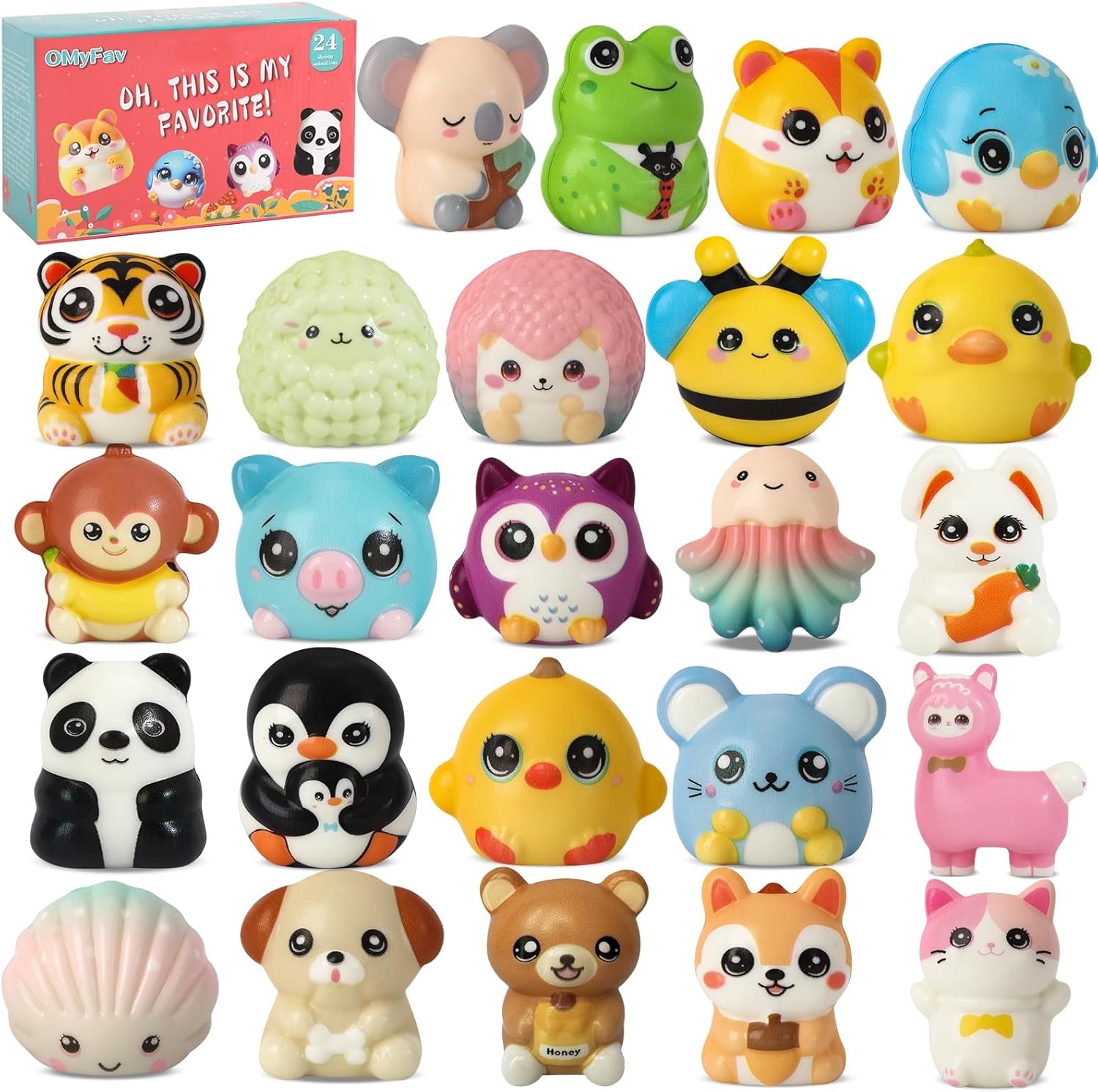
| Mid tier (the workhorse) | Assorted kids' keychains ($0.67 each), animal squishies ($0.79 each) | about $0.79 each to $0.67 each | ~90–110 |
| Big-prize wall | Larger plush, boxed toys, gift-card envelopes | $5–$20 | ~12–24 |
Keychains and squishies earn the mid-tier slot because they're the prize kids line up to win: cheap enough to hand out by the dozen, cute enough that a kid is happy to walk away with one. These two packs are built for exactly that job:

How many prizes do you need per 100 kids?
Start from two numbers you can estimate: how many games each kid plays, and how often a play wins something. As a rule of thumb, plan on roughly four plays per kid and about a 70% win rate. That's 4 × 100 × 0.7 ≈ 280 prizes per 100 kids, the total across all three tiers rather than per booth. Weight it heavily toward the cheap tier, let the mid tier carry the bulk of the “good” wins, and keep the big prizes rare.
Treat those figures as planning guides. Real events vary with how many games you run, how generous the win rate is, and how long kids stay. The safe move is to round up on the cheap and mid tiers; running out of prizes halfway through a carnival is far worse than boxing up a few leftovers, and leftover keychains and squishies keep perfectly for next time. If your event is bigger, scale linearly: a 300-kid fair needs about three times the counts above.
What makes a good prize-booth prize?
A good prize does three things: it's visible from the booth, it survives a pocket, and it needs no batteries. Kids at a carnival choose with their eyes from a few feet away, so a prize has to read instantly as bright and recognizable. It also has to survive being shoved in a pocket and carried around a loud gym for two hours, which rules out anything fragile or fiddly. And nothing that needs batteries or assembly, because a prize that doesn't work the moment it's won is a complaint waiting to happen. One more non-negotiable if little kids are playing: keep the cheap tier free of small parts. The U.S. Consumer Product Safety Commission bans toys with parts small enough to fit a young child's throat for the under-three set, and a booth handing prizes to a mixed-age crowd is no place for a choking hazard.
A lot of “carnival prize” assortments are designed to be cheap first and good never, and kids can tell. A cracked plastic toy that breaks before pickup is the reason parents grumble about carnival junk. A keychain or squishy costs about the same per piece and gets kept.
The same qualities cover a question we hear more each year: mini claw machine prizes. The toy claw machines kids run at home and at parties need refills that are small, light, and grabbable, and the smaller pieces in an assorted keychain or squishy pack do that job. Sizes vary by machine, though, so check the size notes on the product page against your machine's opening before stocking up.
Cheap-tier prizes that work (none of which we make)
Since we only make mid-tier prizes, the cheap tier is territory where we have nothing to sell you. Sticker sheets and temporary tattoos are the backbone: pennies a piece at volume, accepted by every age, and consumed the same day, which at this tier is fine because the job is a small win rather than a keepsake. Bouncy balls photograph like the classic carnival prize and kids love them; the catch is they spend the rest of the event under the bleachers, so hand them out bagged. Glow bracelets are the best trick in the book for an evening carnival, when the whole gym lights up, though by morning they're done glowing. Mini bubble bottles are a safe bet for the youngest kids at a daytime fair, but they leak, so hand them out at the exit instead of dropping one in a bag a kid carries all night.
Stocking a school carnival on a budget?
For a PTA or room parent running a school carnival, the budget move is to buy a few large assorted bulk packs rather than a cart of small ones; the per-piece price drops and volunteers can restock the whole table from one box mid-event. Put the money where kids feel it, in the mid tier, keep the cheap tier truly cheap, and resist over-buying the big-prize wall since those are for display more than for winning.
And leftovers never go to waste: extra keychains and squishies roll straight into a classroom prize box, the next school event, or seasonal favors, so the same bulk packs stretch across the whole year. If you'd rather see the full lineup of packs and sizes before you commit, browse all the OMyFav packs we make.
Frequently asked questions
How do you tier carnival prizes by cost?
Run three tiers: a high-volume cheap tier for small wins, a mid tier for the prizes kids hope for, and a small big-prize wall for the marquee items. Roughly plan on the cheap tier making up the bulk of what you hand out, the mid tier being the workhorse, and the big prizes staying rare. Buy each tier per 100 kids rather than per game, so restocking is one calculation instead of a dozen.
How many prizes do you need per 100 kids?
Estimate plays per kid times your win rate. If each child plays about four games and roughly 70% of plays win a prize, that's around 280 prizes per 100 kids. Weight that toward the cheap tier, keep the mid tier as your reliable workhorse, and hold big prizes to a couple dozen. Treat these as rules of thumb and round up; running out mid-event is worse than a few leftovers.
What makes a good prize-booth prize?
It should be visible from a few feet away, survive a pocket, and need no batteries or assembly. Kids choose with their eyes at a booth, so bright and recognizable beats subtle. Skip anything fragile and anything a five-year-old could choke on. A keychain or squishy checks every box: eye-catching on the table and durable in a pocket.
How do you stock a school carnival prize booth on a budget?
Buy a few large assorted bulk packs instead of many small ones; the per-piece cost drops and a PTA can restock the table from a single box. Concentrate spend on the mid tier kids genuinely want, keep the cheap tier truly cheap, and don't over-buy big prizes. Leftovers keep: a spare box becomes a classroom prize stash or next season's stock.
Should carnival prizes be different from birthday favors?
The job is different, so the buying is different. A birthday favor is one good item per guest; a carnival needs volume, visible variety so kids feel like they're choosing, and a low enough per-piece cost to hand out hundreds. The good news: the same assorted keychains and squishies work for both, you just buy far more of them for a carnival.
Do carnival prizes need to be different for different ages?
A little, but less than you'd expect. Assorted-design packs cover a wide age range because kids self-select the design they like, so a single mid-tier pack works for most of the crowd. Keep the cheap tier free of small parts if young children are playing, and make sure your big-prize wall has at least one item that appeals to the older kids so the marquee prizes don't skew too young.
What are good prizes for a mini claw machine?
Small, light, grabbable items with nothing to snap off. A toy claw does best with soft, roundish prizes it can lift, which is why small squishies and plush keychains work well as refills. The one check that matters is size: machines vary, so compare the size notes on the product page with your machine's opening before stocking up. Anything that survives being dropped by the claw a dozen times is the right kind of prize.
OMyFav makes the products featured on this page. All “shop” links go to our own Amazon storefront.