Squishy Toys, Explained: Slow-Rise, Sensory Use, and When They Beat Keychains
What does slow-rise mean?
“Slow-rise” describes how the toy behaves after you squeeze it. Press a slow-rise squishy flat and let go, and instead of snapping back the instant you release it, it puffs back up slowly; you can watch it recover over a few seconds. The pause between squeezes builds a little anticipation, and the moment it finishes rising you want to squeeze it again. That loop of squeeze and recover is what makes slow-rise squishies (often typed slow rise squishies, no hyphen, same toy) so easy to fidget with for long stretches. The squish itself comes from soft slow-rise foam, which is why you'll also see them called foam squishies or foam squishy toys: the foam is what eases back into shape after every squeeze.
A plain squeeze toy that snaps straight back doesn't have that rhythm; it's a single action, over and over, with no anticipation. So if you're choosing between squishies, look for the words “slow-rise” (sometimes written “slow rising”) on the listing. That's the feature our animal squishies are built around.
Are squishies good classroom sensory tools?
They can be a genuinely good fit. Plenty of teachers keep quiet fidgets on hand: in calm-down corners, at a sensory table, or for kids who focus better with something in their hands. A squishy's standout classroom advantage is that it's silent. There's no clicking, no snapping, no rattle. A clicky fidget can distract the whole row; a squishy doesn't make a sound.
The counterpoint: for some kids, any object on the desk becomes the distraction rather than the tool. That's the teacher's call, not something a product page can settle. Where squishies do reliably work is one per student instead of a single shared toy; sharing one squishy turns it into a negotiation. For a class of about 20, a 24-count pack covers one each with spares. If you're buying for a whole class party rather than year-round fidget use, our carnival & classroom prize ideas walk through how to stock a prize table and size a bulk pack to the group.
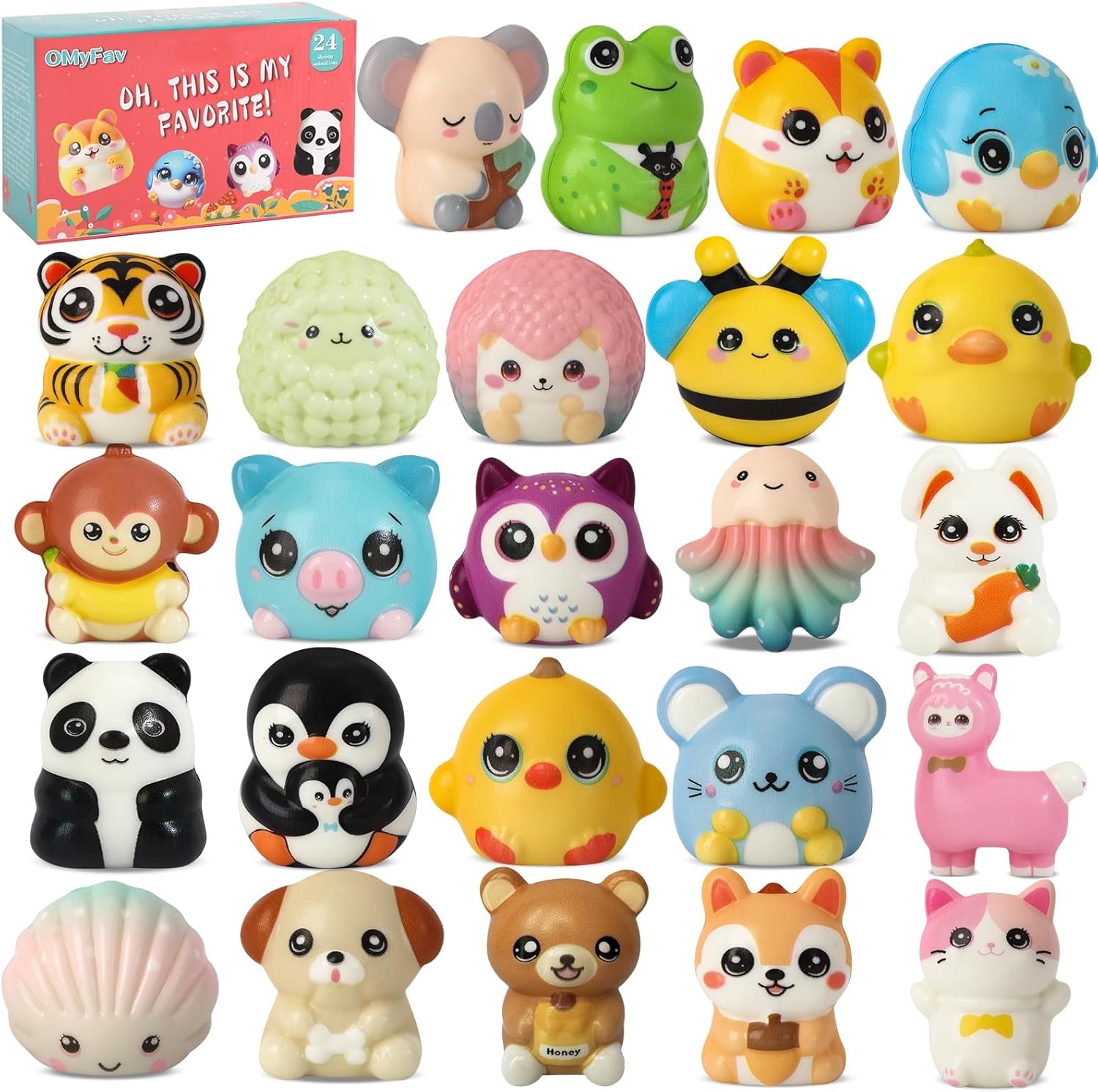
Squishies vs plush keychains: which favor wins?
This is the question we get most, and it's a split decision, because they do different jobs. A squishy is a squeeze-in-your-hand fidget; a keychain is something you clip on, show off, and collect. Here's how the two compare on the dimensions that decide it:
| What matters to you | Squishies | Plush keychains |
|---|---|---|
| Silent fidget use (desk / calm-down) | Yes: soft, slow-rise, no noise | Not really; made to clip and carry |
| Clips to a backpack or zipper | No clip; all soft squish | Yes, built around the clip |
| Younger kids / soft in little hands | Friendlier: soft, no hard clip | Fine, but has a small metal clip and ring |
| Trade-and-collect / show-off appeal | Lower; less visible once pocketed | Higher; visible on a bag and easy to swap |
| Price per piece (our 24-packs) | $0.79 each | $0.87 each |
For sensory or fidget use and for younger kids, the squishy wins; for backpack display and the trading that older kids love, the keychain wins. Price is close enough at the same 24-count that it shouldn't decide anything. If you've landed on squishies, the full rundown of our 24-pack covers what's in the box; if the clip-on angle sounds more like your crowd, start with our kawaii plush keychains 24-pack.
What to check before buying squishies
Squishies are a low-risk buy, but a few things separate a pack that works from one that disappoints. Run through this before you order:
- Pack count vs guest count. Count the kids first, then add a couple of extras for siblings and drop-ins, and buy the pack that covers it in one box. Piecing favors together from singles costs more and eats an afternoon; our party favor cost guide has the real per-kid math.
- Design variety. A multi-design assortment beats twenty-four identical squishies: the mix lets each kid pick a favorite, which is half the fun and cuts down on squabbling.
- Age grading on the listing. Squishies are soft and clip-free, which is gentler for younger hands than a keychain, but they're made to be squeezed, not chewed. The small-parts line is age three, and we didn't set it. Anything with a clip, a ring, or a pom pom stays away from under-threes, and the age grading on each listing is the rule, not a suggestion. The U.S. Consumer Product Safety Commission restricts toys with small parts for children under three.
- Slow-rise vs regular squeeze toys. If the calming, repeat-squeeze fidget effect is what you're after, confirm the listing says slow-rise; a toy that just snaps back won't give you that.
- Gift-box vs bulk-bag packaging. Packaging changes how the pack presents. Ours arrives in a gift box, so you can hand the whole thing over as one present or portion the squishies out yourself; a loose bulk bag is fine for pure hand-outs but doesn't gift as nicely.
Get those five right and a squishy pack is one of the safest favor buys going: soft, non-candy, and still being squeezed long after the party's over. For the specifics of what we make (24 slow-rise animal squishies in a gift box), see the full rundown of our 24-pack.
Frequently asked questions
Are squishies good stress relievers?
For most people, yes. Squeezing something soft and slow-rise is a simple, quiet way to keep hands busy and settle nerves, which is why squishies get used as fidget and stress toys by kids and adults alike. Our own animal squishies are described as great stress relievers too, though how much any fidget helps varies from person to person.
What's the difference between slow-rise and a regular squeeze toy?
A regular squeeze toy snaps back to shape the instant you let go. A slow-rise squishy eases back slowly over a few seconds, and that slow recovery is the appeal: you get to watch it puff back up and then squeeze it again. If you want the calming, repeat-squeeze fidget effect, slow-rise is the type to look for.
Can kids use squishies in the classroom?
Many teachers allow quiet fidgets, and a squishy's big classroom advantage is that it's silent, with no clicking to distract the room. That said, for some kids any object on the desk becomes a distraction, so it's the teacher's call. If they are allowed, one squishy per student works better than one shared toy passed around.
Do squishies work as party favors?
Yes. A soft squishy is a non-candy favor kids keep and fidget with after the party, and a multi-design pack lets each guest pick a favorite. They read as a fun win at carnival prize tables and drop neatly into goodie bags. Buy one pack that covers the whole guest list in a single box.
How many designs come in your squishy pack?
Our pack is 24 slow-rise animal squishies in a gift box, an assortment of cute animals so kids can pick a favorite. Check the current listing photos to see the exact animal assortment before you order, since the mix can change.
Are squishies safe for toddlers?
Squishies are soft with no keychain clip, which makes them friendlier for little hands than a keychain, but they're not chew toys. The small-parts line is age three, and we didn't set it. The age grading on each listing is the rule, not a suggestion, and kids who still mouth toys need supervision.
OMyFav makes the products featured on this page. All “shop” links go to our own Amazon storefront.