Non-Candy Class Valentines (Bulk Ideas)
Why go non-food for a class valentine exchange?
A class valentine exchange is the classroom tradition where every student gives a small valentine to every other student, so whatever you send gets multiplied across the whole roster. It's one of the few gifting moments where every single kid in the room is both giving and receiving, which makes it the exact wrong place for a food allergy surprise. That's the real reason non-food has become the norm: no parent has to squint at an ingredient panel, and no child with a nut or dairy allergy gets handed something they can't take. The scale matters: FARE estimates about one in 13 U.S. children has a food allergy, roughly two in every classroom, so in a room of twenty-some kids a candy exchange almost always leaves someone out. Many schools now cap or ban candy outright as well, so a small toy or pen is often the only choice that clears the classroom rules. The bonus is longevity: a squishy or a keychain is still in a backpack weeks later, while a candy heart is gone before the buses leave.
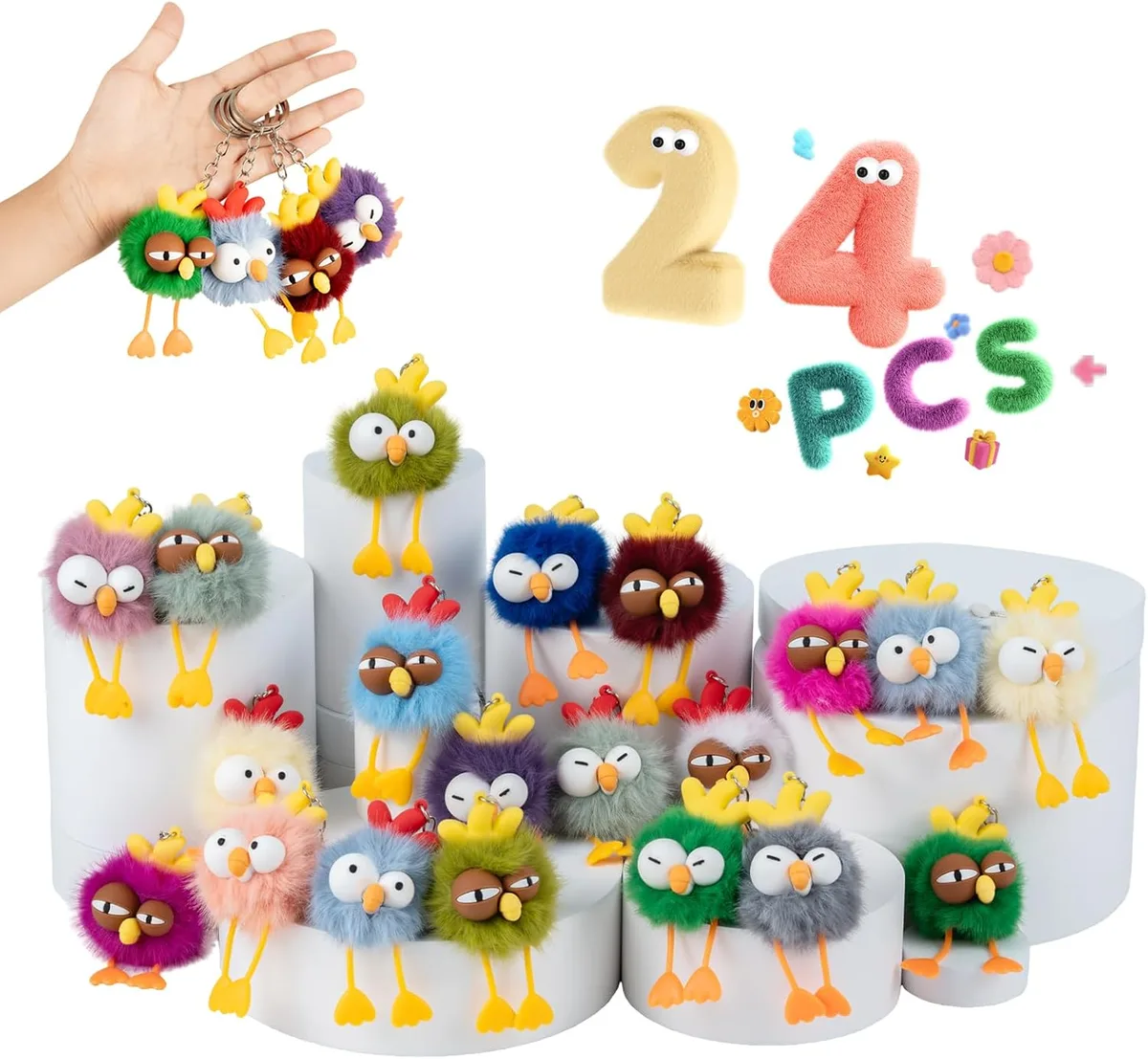
None of this requires a themed product. What a class valentine needs is to be small, safe, and genuinely wanted, and an assorted-design pack delivers that better than a box of identical trinkets, because each classmate can end up with a character they'd have chosen.
There's also a fairness angle that non-food favors handle quietly. In a class exchange every kid hands out to every other kid, so whatever you send gets compared, twenty-plus times over, on a desk. A small favor of the same kind reads the same to every child, whereas a mixed candy bag turns into a trading floor and leaves the allergy kids on the sidelines. An assorted pack sidesteps that: the designs differ, but they're all the same kind of good, so the exchange stays even. That evenness is a big part of why teachers increasingly ask for one identical-value item per classmate.
Which non-candy favors work best as class valentines?
Three of our packs cover almost any classroom, and the choice comes down to age and favor type rather than quality. Here's how they compare per classmate, with live prices:
| Non-candy valentine (bulk pack) | Pack count | Per classmate | Best age fit |
|---|---|---|---|
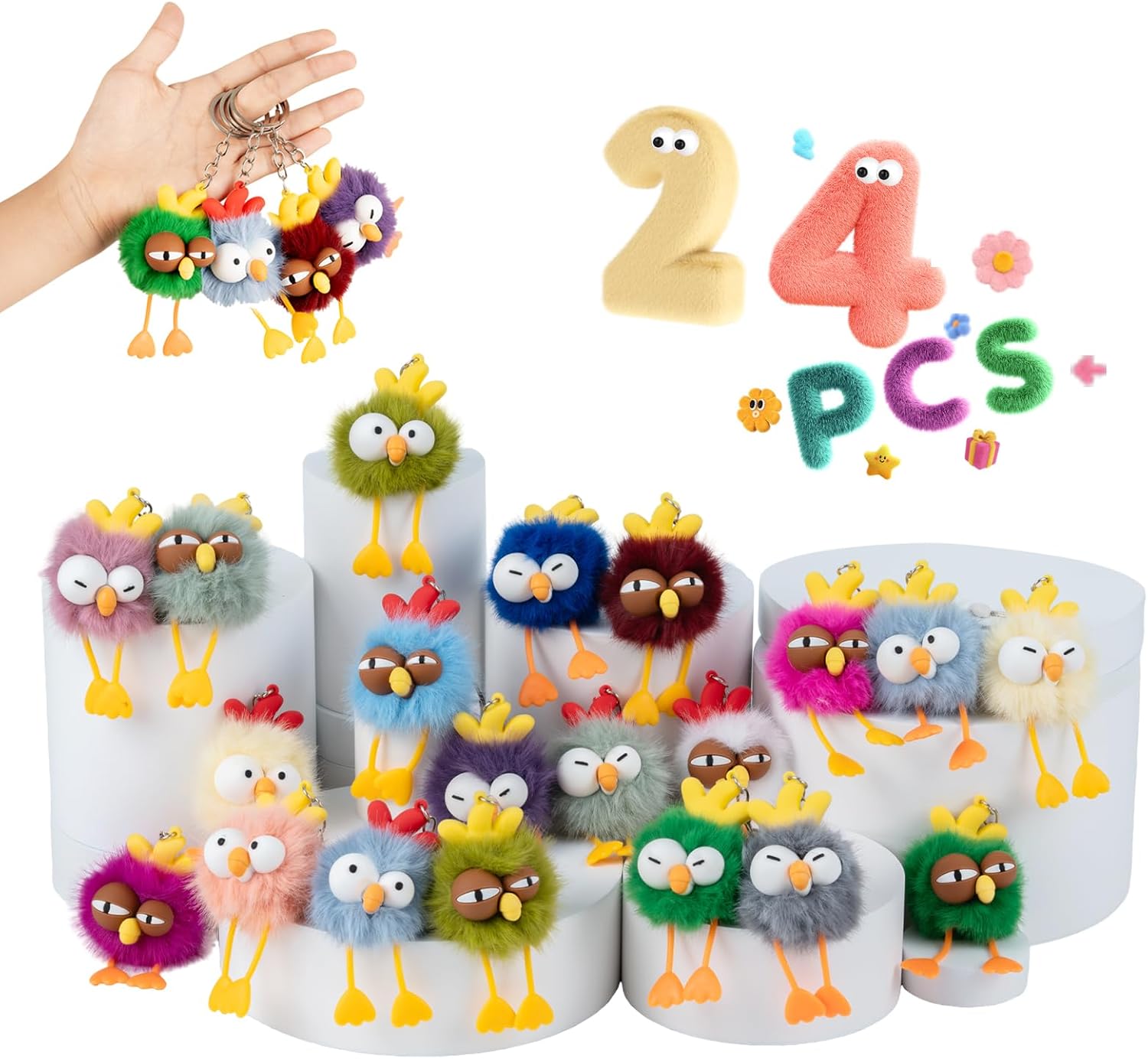
| Cute chickie keychains | 24 | $0.83 each | Roughly 4–10; cute on sight |
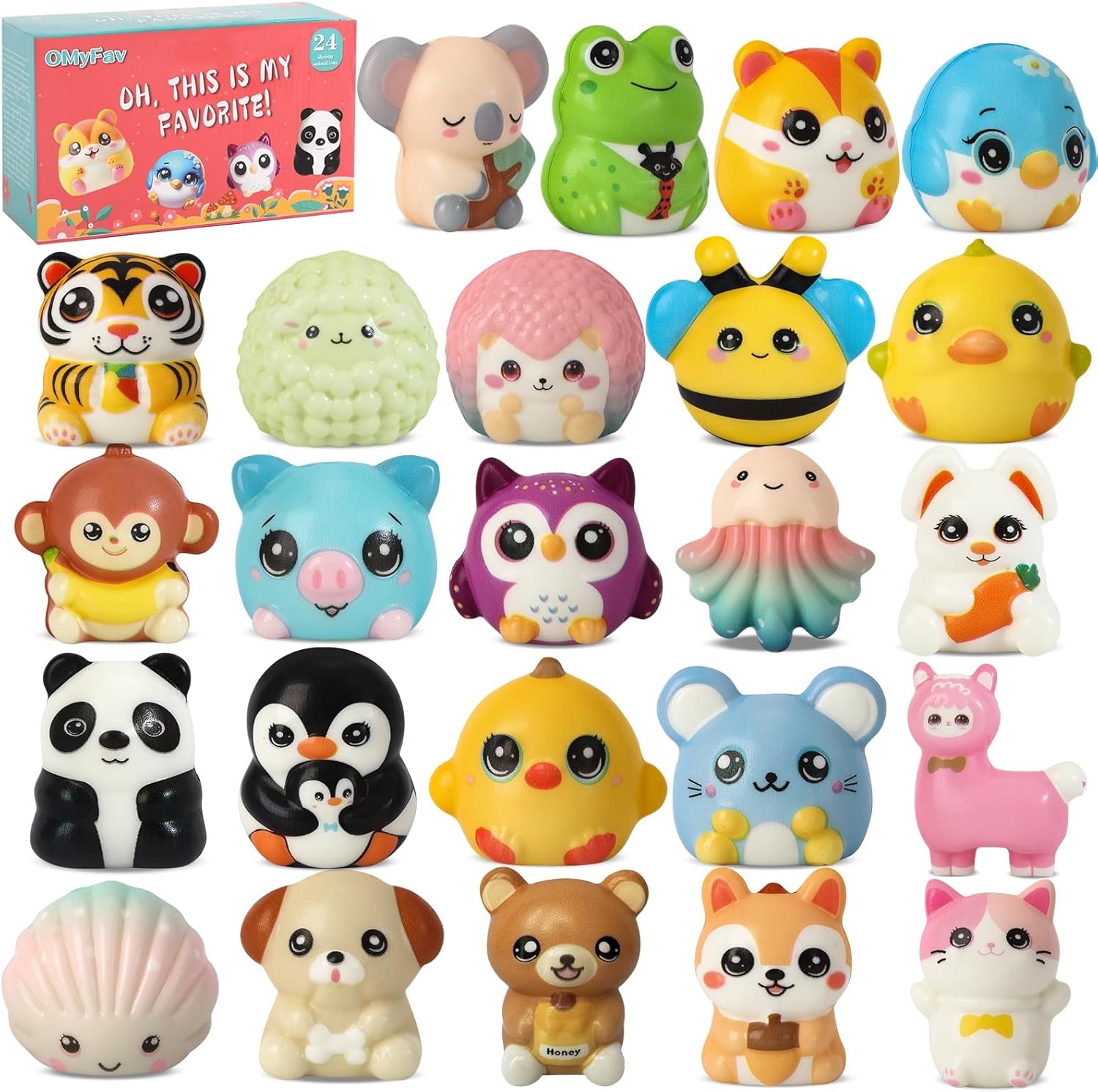
| Cute animal squishies | 24 | $0.79 each | Younger hands; softest, lowest-cost |
| Kids keychains | 24 | $0.67 each | Roughly 5–12; clips to a backpack |
All three come in under a dollar a classmate, which is what makes covering a 24-kid class list feel routine rather than indulgent. A single 24-count pack covers a class of about 20 plus the teacher. The chickie keychains lead on pure cute factor, a hit the moment a young kid sees one, while the squishies are the softest and cheapest, the natural pick for the youngest rooms or for a child who'd rather squeeze than clip. The kids keychains split the difference and skew a little older. For a room that spans a wide age range, either keychain covers it; for K–1, lean squishy.
One thing all three share is that they're gender-neutral, which matters more for a class set than a single gift. You're buying for a whole roster you may not know well, so an animal charm or a squishy avoids the pink-versus-blue split that leaves half the class lukewarm. The assortment does the personalizing for you, since kids gravitate to different characters, without you having to sort anything by who's getting what. That's the practical reason a cute-animal favor tends to outperform a themed one for a class exchange: one thing that works for everyone, bought once.
Pairing a favor with a paper valentine card
The reason a cute-animal favor works as a valentine even though it isn't themed is that the paper card does the theming for you. The standard move is to attach the favor to a normal printed valentine with a hole punch and a loop of ribbon, or a small stapled tab, write the classmate's name on the card, and hand the whole thing over as one piece. The card carries the name, the hearts, and the “Happy Valentine's Day,” and the keychain or squishy is the part that survives past the afternoon. It's a few minutes a night of a kid's time to assemble a class set, and it turns a throwaway card into something that gets kept.
One planning note before you buy: get the current class count from the teacher rather than last year's number, since rosters shift, then round up to a pack with a few spares for the teacher or the kid who joined in January. If you want to see how this favor-plus-card approach scales to a full Valentine's party, our Valentine party favors guide covers handing favors out at party scale, and the by-grade classroom guide helps match the pick to the exact age you're buying for.
Frequently asked questions
What are good non-candy class valentines?
Small favors given one per classmate: a clip-on keychain, a soft squishy, or a fun pen. They're safe for a classroom with food allergies and don't run into sugar rules, and unlike candy they're still around weeks later. From a single pack each one is less than a dollar, and one box covers the class list plus the teacher.
Why give non-food valentines to a class?
Food allergies are the main reason: a non-food valentine means no parent has to check an ingredient label and no kid gets left out of the exchange. Many schools also limit candy outright. A small toy or pen sidesteps both, and it lasts past the party, which candy never does. Non-food is simply the safest default for a whole-class exchange.
Are these valentines heart-shaped or Valentine-themed?
No. Our packs are cute-animal keychains, squishies, and pom-pom pens, with no hearts or red-and-pink decor. They make good class valentines because a cute favor a kid keeps beats another sugar card. Clip one to a paper valentine and the card carries the Valentine's part while the favor is what gets kept.
How do I pair a favor with a paper valentine card?
The simplest version is a hole punch and a bit of ribbon or a stapled tab: attach the keychain or squishy to a standard paper valentine, write the classmate's name on the card, and hand it over as one piece. The card carries the name-on-a-card ritual and the seasonal look; the favor is the part that outlasts the day. It takes a kid a few minutes a night to assemble a class set.
How many class valentines do I need?
One per classmate plus the teacher, then round up to a pack with a spare or two. A 24-count pack works for a class of about 20; a larger class means a second pack. Ask the teacher for the current class count, since rosters change, and buy to cover it rather than cutting it exactly.
How much do non-candy class valentines cost each?
From a boxed pack, under a dollar each; the same small toy bought one at a time off a shelf runs several dollars. Prices on this page are pulled live from our Amazon listings, so the per-piece math stays current even when prices move.
OMyFav makes the products featured on this page. All “shop” links go to our own Amazon storefront.